The dance
Fon lep and Lanna dance: what Thai dance looks like in the north
The cabaret mixes in Thai cultural dances. Here is a sourced look at classical and northern dance, from the fingernail dance to the candle dance.
Pick my seat ↗Quick answer
Thai dance is divided by Wikipedia into classical dance, the high art, and folk dance, with northern forms rooted in the old Lanna kingdom of Chiang Mai. The best-known northern form is fon lep, the fingernail dance, in which Wikipedia says each dancer wears six-inch-long brass fingernails. Other northern dances it lists include the silk-weaving dance, a sword dance and a candle dance. The listing says the cabaret includes Thai cultural dances and songs but does not name which.
Northern Thai dance, from the sources
| Dance | What Wikipedia says |
|---|---|
| Fon lep | The northern fingernail dance; dancers wear brass nails about six inches long, with a hair chignon and a yellow jasmine tiara |
| Fon sao mai | The silk-weaving dance, listed among northern dances |
| Sword dance and candle dance | Also listed as northern dances |
| Khan Dok | A Lanna dance of blessing |
Two families of dance
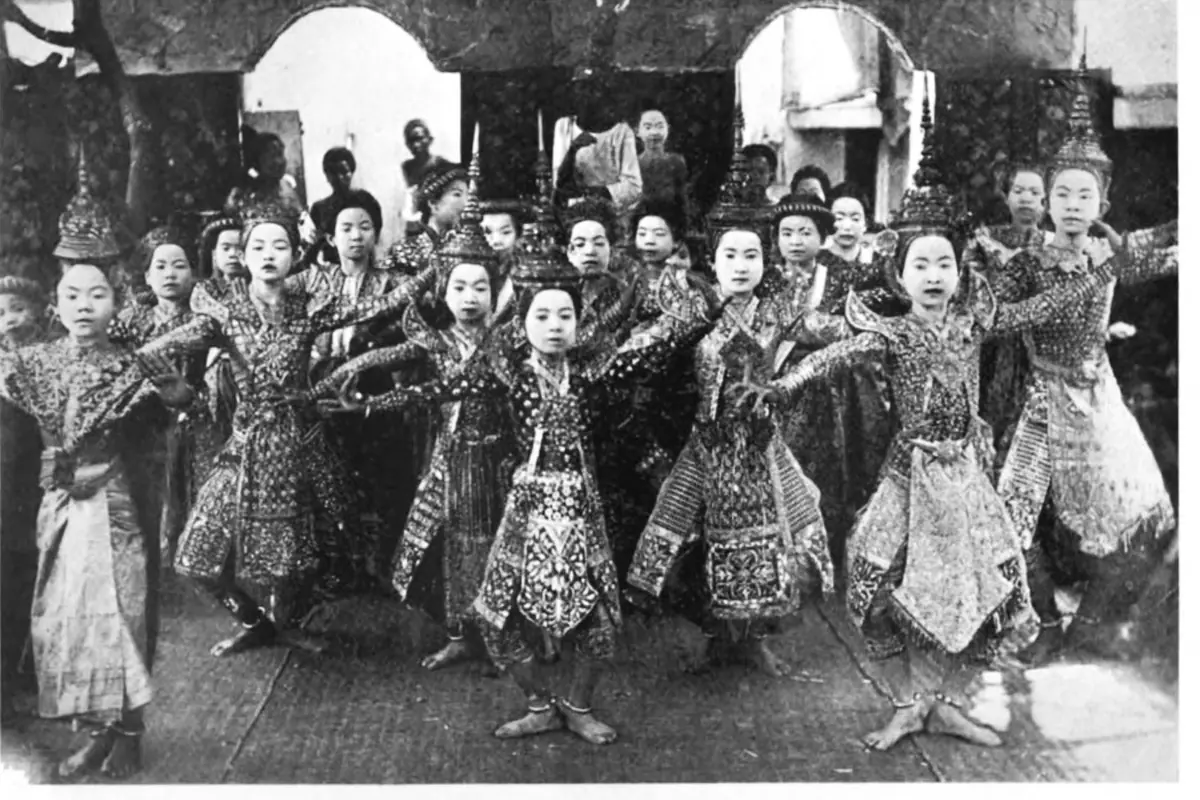
Wikipedia describes dance as the main dramatic art form in Thailand and divides it into classical dance, the high art, and folk dance. Classical dance is the courtly repertoire, with its precise hand positions, slow movement and richly embroidered costume; the historic photograph here shows court dancers in tall crowns from the early twentieth century. Folk dance covers the many regional forms, usually lighter in tone and tied to local festivals and village life. The article traces Thai dance back far beyond the modern kingdom, saying archaeological finds from the Dvaravati period, between the sixth and eleventh centuries, show dance poses influenced mainly by Indian culture. That long ancestry is one reason Thai performers train for years, and one reason a quick cabaret number cannot stand in for a full classical programme.
The fingernail dance
Fon is the northern word for dance, and fon lep is the best-known form from Chiang Mai's region. According to Wikipedia, each dancer wears six-inch-long brass fingernails, with the hair in a chignon and a yellow jasmine flower tiara. The long nails extend the line of each finger and make the smallest wrist movement look dramatic. If a revue in Chiang Mai includes a fingernail number, you will recognise it by those extended hands and by the slow, controlled movement. The listing does not promise it, so treat it as something that might appear and enjoy it if it does. Seeing a cabaret that draws on regional craft is more satisfying when you know what the borrowed element is.
Lanna, the kingdom behind the style
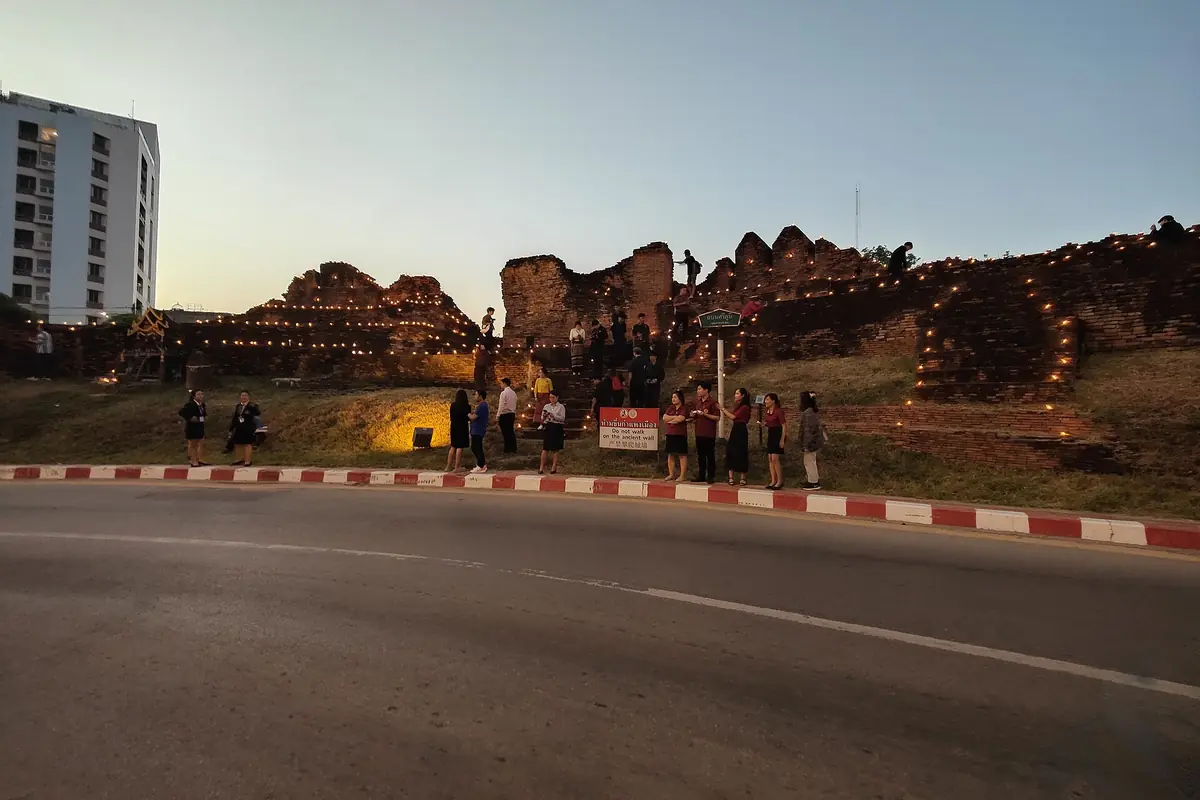
Northern Thai dance carries the name of Lanna, the kingdom whose capital was Chiang Mai. Wikipedia says Mangrai founded the city in 1296 and made it the capital, that the kingdom is dated 1296 to 1775 in its infobox, and that it used its own spoken language, Kham Mueang, and its own script, Tai Tham, which resembles Thai but differs in spelling rules. Lanna was absorbed into Siam in stages, and by 1909, the article says, it no longer existed as a separate polity. You can still see that history in the old city. The photograph shows the brick ruins of the city wall, lit with candles on the eve of Yi Peng. Dance is another surviving thread: a style named after a medieval kingdom still appears at festivals, weddings and stage shows today.
How a cabaret relates to all this
A cabaret is not a classical recital, and nobody should expect one. Wikipedia defines cabaret as a theatrical form with music, song, dance, recitation or drama, normally in front of seated tables. A show that blends cabaret with Thai cultural dance is borrowing from the heritage tradition and putting it into a popular entertainment frame. The two coexist comfortably: spangles and sequins on one side, jasmine and brass on the other. If your main interest is classical technique, look for a dedicated Thai dance performance and treat the cabaret as a different kind of evening. If you enjoy hybrid stage entertainment, the borrowing is part of the charm, and a sense of the northern tradition will make the Thai numbers easier to appreciate.
Frequently asked questions
What is fon lep?
The northern Thai fingernail dance. Wikipedia says each dancer wears six-inch-long brass fingernails, with hair in a chignon and a jasmine flower tiara.
Will the cabaret include a fingernail dance?
The listing says the show includes Thai cultural dances and songs but does not name them, so it is not guaranteed.
What does Lanna mean for the dance?
Lanna was the kingdom founded in 1296 with Chiang Mai as its capital. Northern dance styles carry that name.
Sources